
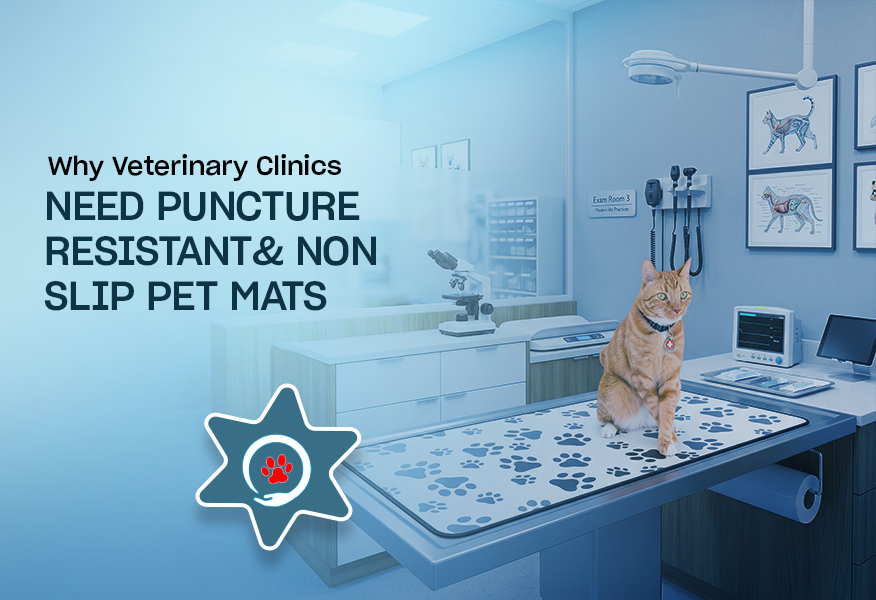
Why Veterinary Clinics Need Puncture-Resistant & Non-Slip Pet Mats?
Walk into any busy clinic, and you’ll see it instantly.

Walk into any busy clinic, and you’ll see it instantly.
A dog hesitates before stepping onto a cold, stainless steel table. A cat stiffens. A technician adjusts their grip.
It’s not just the procedure causing stress. It’s the surface.
And here’s the problem most clinics overlook:
Your flooring and table surface directly impact animal safety, staff efficiency, and overall clinic performance.
That’s why more professionals are turning to puncture-resistant pet mats for veterinary clinics.
Puncture-resistant and non-slip pet mats are crucial in veterinary clinics because they improve traction, prevent injuries, reduce animal stress, and enhance handling efficiency.
They also:
In short: better surfaces = safer, faster, more efficient care.
Most clinics rely on stainless steel veterinary examination tables and tile or epoxy floors. As they are easy to clean, these surfaces are not designed for traction.
According to clinical safety insights and veterinary flooring studies, slippery surfaces significantly increase the risk of: Muscle strain, Joint stress, and Acute injuries in dogs.
In fact, research in pet mobility shows that dogs slipping on smooth surfaces are more prone to soft tissue injuries and long-term joint issues.
Now combine that with stress, and you get a much bigger problem.
When clinics don’t invest in proper veterinary clinic safety mats, the risks compound quickly.
Slippery clinic surfaces significantly increase the risk of injuries in pets. When animals lose traction, they can experience ligament strain, joint stress, or, in severe cases, fractures. This is especially critical for senior dogs, large breeds, and already injured animals.
Unstable footing doesn’t just affect safety, it impacts behavior. When pets feel like they might slip, it triggers a fear response.
Research shows this can increase cortisol levels, causing pets to resist handling, try to escape, or become aggressive.
And for clinics dealing with reactive animals, pet mats for aggressive or anxious animals help create a stable, secure surface that reduces stress and improves cooperation.
When pets feel unstable, they panic, and that puts staff at risk.
According to the Occupational Safety and Health Administration (OSHA), animal handling is a major source of workplace injuries in veterinary settings, including bites, scratches, and handling-related incidents.
Poor traction increases these risks, while stable surfaces help reduce the likelihood of sudden reactions and improve overall safety for staff.
In a busy clinic, small delays add up fast. Extra time spent stabilizing pets slows procedures, reduces daily capacity, and impacts revenue.
Industry insights show that improved handling efficiency can boost productivity by 15–25%. When pets feel secure, procedures become faster and smoother, making proper matting a direct driver of operational performance.
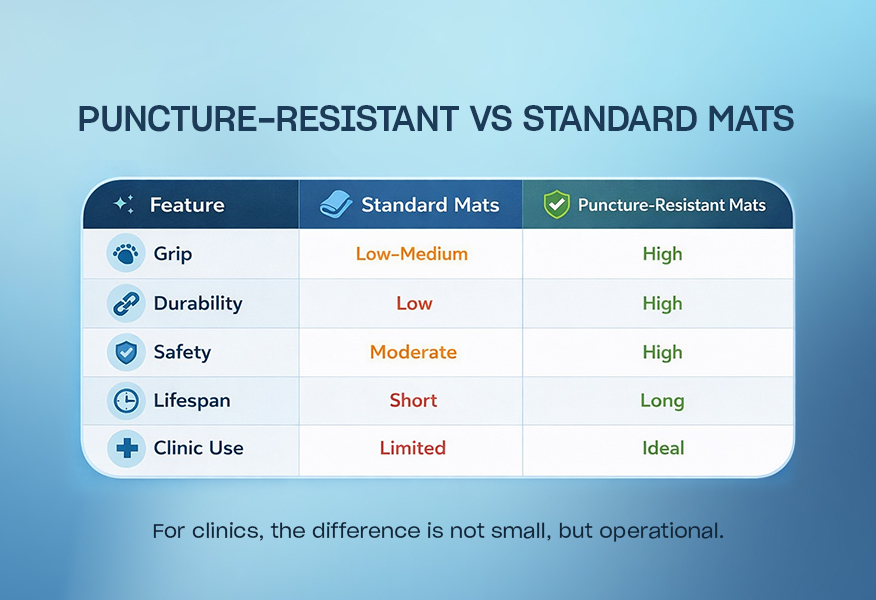
Some clinics try quick fixes like towels, foam mats, and basic silicone-coated mats. But these fail quickly. Here’s why:
Most standard mats are designed for comfort, not for animal handling safety.
Veterinary Clinics want to meet the modern Veterinary clinic safety standards, which means mats must do more than sit on a table. They need to deliver performance. In short, they should be:
This is where veterinary-grade pet floor mats outperform generic options.
Puncture-resistant pet mats for veterinary clinics are designed with reinforced materials such as high-density rubber composites, multi-layer structures, and scratch-resistant surfaces. This clearly states that these mats:
And many heavy-duty pet mats for clinics can withstand years of daily use without degrading.
What a silly question, don’t you think, but as you want us to answer this, so why not? Here’s the key insight most of you missed:
Pets don’t fear the clinic; they fear instability because instability brings unnecessary anxiety and pressure. In simple terms, your pets are no longer feeling secure.
When a pet feels secure:
This is why non-slip pet mats for vet clinics are not optional anymore, they’re foundational.
In real-world settings:
That’s the difference between:
A 10-minute procedure Vs. 5-minute smooth handling.
This is why veterinary clinic flooring solutions are now considered an investment, not just equipment.
High-quality commercial pet mats for veterinary clinics are used in:
They are especially useful for:
This makes them the best puncture-resistant non-slip pet mats for vet clinics.
Hygiene isn’t optional, but mandatory, or it should be regulated. Veterinary environments must maintain strict cleanliness standards. And one way to achieve this goal is to bring high-quality, non-slippery exam pet mats.
Because high-quality mats resist bacterial buildup, are compatible with disinfectants, and maintain surface integrity after repeated cleaning.
This also aligns with modern Veterinary clinic safety standards and infection control protocols.
Now you know why high-quality pet mats are a must-have, and if you’re planning to buy puncture-resistant pet mats, keep two things in mind:
Bonus:
This is where many wholesale pet mats for veterinary clinics differ in quality.
Let’s talk business. Upgrading to veterinary-grade pet floor mats delivers faster procedures, reduced injuries, lower replacement costs, and improved client trust.
Operational data shows optimized setups can increase efficiency while reducing staff fatigue. In short, better surfaces don’t just improve safety, they directly improve profitability and workflow.
Here’s the truth: “Veterinary clinics don’t just need mats.” They need performance-driven surfaces.
Puncture-resistant, non-slip pet mats are no longer optional, they are crucial for the safety, efficiency, and better patient outcomes. Because the best clinics understand that:
Every surface your patient touches shapes their experience.And when you improve that surface: “You improve everything else.”
They prevent slipping, reduce stress, and improve handling efficiency.
Reinforced materials like rubber composites that resist claws and wear.
Use high-traction, non-slip mats and avoid smooth, hard surfaces.
High-quality mats last for years, but should be replaced when damaged.
Walk into any busy clinic, and you’ll see it instantly.
If you run a veterinary clinic or grooming business, you
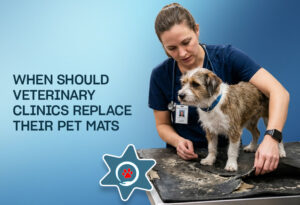
Let’s say this upfront: Most veterinary clinics replace their pet
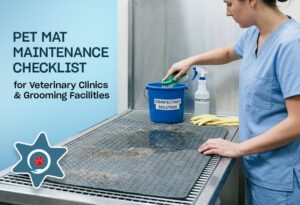
If your clinic or grooming facility has a sanitation SOP
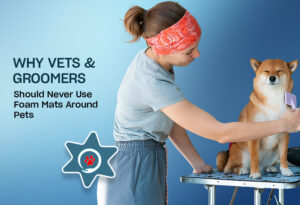
Foam mats look innocent enough. Soft, cushy, and budget-friendly. What
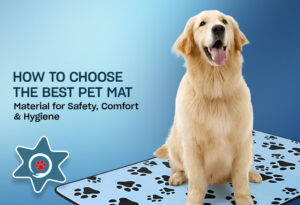
Let’s be honest for a second! Most people don’t think