When Should Veterinary Clinics Replace Their Pet Mats? A Safety & Hygiene Guide
Let’s say this upfront: Most veterinary clinics replace their pet

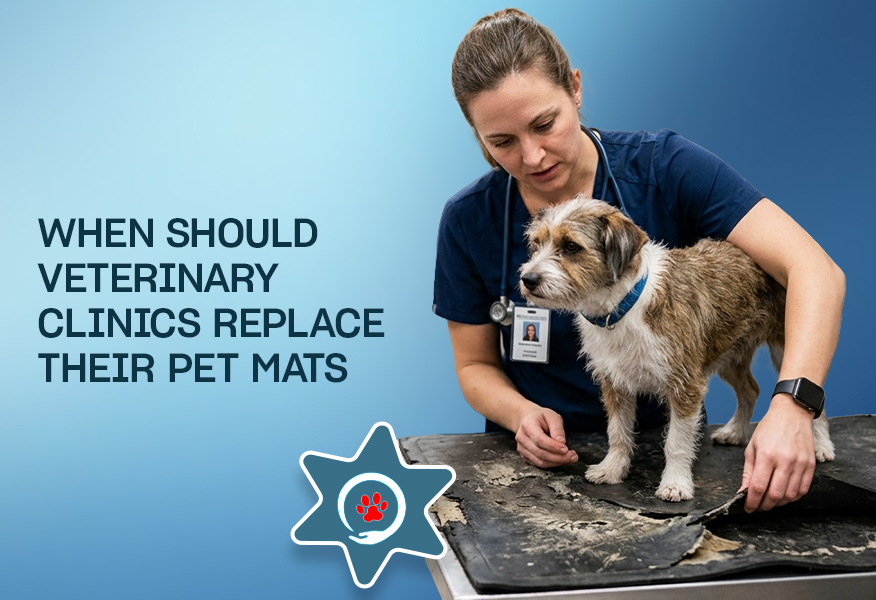
Let’s say this upfront: Most veterinary clinics replace their pet mats too late.
Not because they don’t care, but because mats feel “non-critical” compared to surgical tools or diagnostic equipment.
But here’s the reality in 2026:
Translation?
Your veterinary clinic’s hygiene mats are no longer background equipment. They’re compliance surfaces.
This means you should know:
When should veterinary clinics replace pet mats, and what are the real safety risks of waiting too long?
The UK veterinary sector is undergoing scrutiny and structural reform discussions aimed at improving transparency and operational standards.
That means:
According to the Centers for Disease Control and Prevention (CDC), contaminated environmental surfaces contribute to pathogen transmission in healthcare environments when cleaning is inadequate or materials degrade.
And degraded materials are the key issue.
A worn mat cannot be “cleaned back to safe” if the surface structure is compromised.
Microbial communities can attach to porous or cracked surfaces and form protective matrices, known as biofilms, that resist disinfectants.
In veterinary clinics, where animals shed fur, saliva, urine, and organic debris daily, micro-abrasions in mats accelerate this process.
That’s not visible.
But it is measurable.
Veterinary environments deal with:
If mats are reused across rooms or remain in place long-term, micro-damage increases the risk of cross-contamination.
That directly affects zoonotic disease prevention protocols.
Hospital-grade disinfectants, especially those containing quaternary ammonium compounds or bleach, gradually break down lower-grade rubber and foam.
Over time, the material becomes:
That’s why commercial pet mat replacement isn’t optional, it’s lifecycle management.
If you’re wondering about the signs your clinic’s pet mats are unsafe, here’s the checklist.
Even hairline fractures allow moisture and microbes to penetrate beneath the surface layer.
Once the top layer breaks, disinfectants can’t reach embedded contaminants effectively.
If stains remain despite proper sanitation protocols, the material may be absorbing fluids rather than repelling them. Absorption increases infection risks from old pet mats and compromises hygiene standards.
When cushioned mats fail to rebound, structural integrity is compromised.
This reduces joint support for recovering patients and signals internal material breakdown.
An odour that remains after cleaning typically indicates trapped moisture or microbial growth below the surface. That’s often an early warning sign of biofilm buildup.
If mats shift when animals step or staff move equipment, the traction backing may be worn down. This increases fall risks for both staff and sedated animals.
Edges that lift create visible trip hazards in high-traffic zones. They also signal material fatigue and reduced dimensional stability.
If clinic hygiene audits note surface deterioration, replacement should be immediate, not scheduled for later. Documentation gaps in clinic sanitation protocols can also amplify liability risk.
This is the question that clinics Google constantly:
How often should veterinary clinics replace pet mats?
Here’s a realistic replacement schedule:
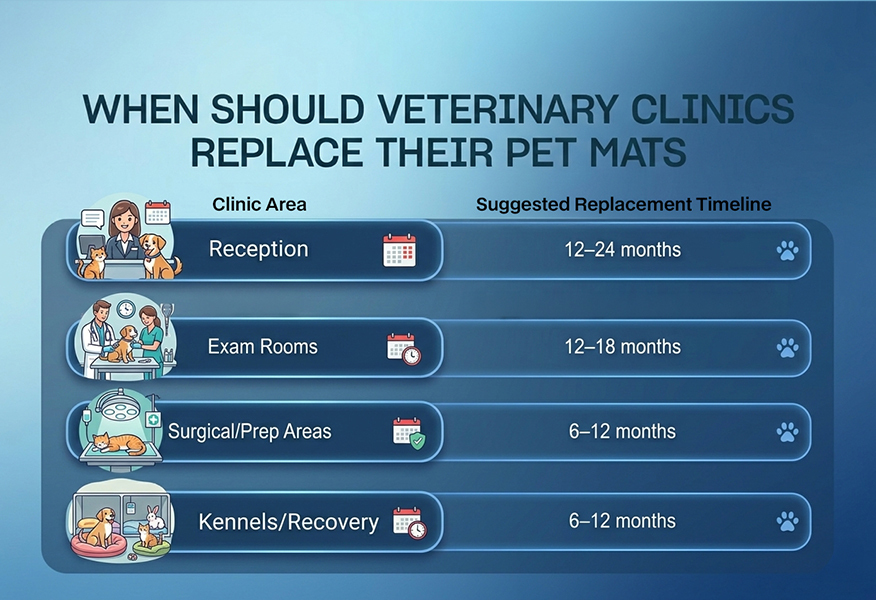
Heavy disinfectant exposure shortens lifespan. High-traffic zones accelerate wear. Cleaning frequency alone does not extend structural lifespan.
The smarter approach? Condition-based inspections every quarter.
Modern veterinary sanitation guidelines increasingly align with broader healthcare IPC principles.
Core expectations include:
A 2022 healthcare environmental study found that damaged surfaces significantly increased microbial survival rates compared to intact materials.
In veterinary settings, that risk multiplies due to higher organic load exposure. Old mats undermine:
Reactive replacement = higher costs long term.
Instead, build a structured commercial pet mat replacement plan:
Replace immediately if:
Replace proactively if:
Waiting until failure increases operational risk.
Ask your team:
If there’s hesitation, the decision is already made. And if you decide, consult an industry expert like NoFear Pet Mats.
Pet mats are not decorative accessories. They’re infection control surfaces. In 2026, veterinary clinics are evaluated on:
Replacing mats on schedule protects:
It’s not about aesthetics.
It’s about standards.
Let’s say this upfront: Most veterinary clinics replace their pet
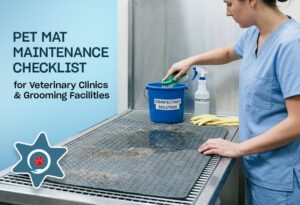
If your clinic or grooming facility has a sanitation SOP
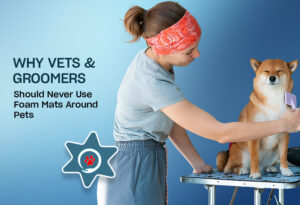
Foam mats look innocent enough. Soft, cushy, and budget-friendly. What

Let’s be honest for a second! Most people don’t think

Picture this: a nervous pup stepping onto a shiny stainless‑steel
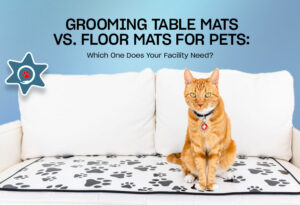
Every grooming facility hits this question sooner or later: Do